No products in the cart.
Uncategorized
Shearling vs Sherpa: What Is the Difference?
16
Nov
Nov
You see shearling and sherpa on jacket tags all the time, and the two words sound almost the same. They are not the same thing. One is real sheepskin and the other is a fabric made to look like it. If you are about to spend real money on a winter coat, the difference matters, so here it is in plain words.
Table of Contents
The short answer
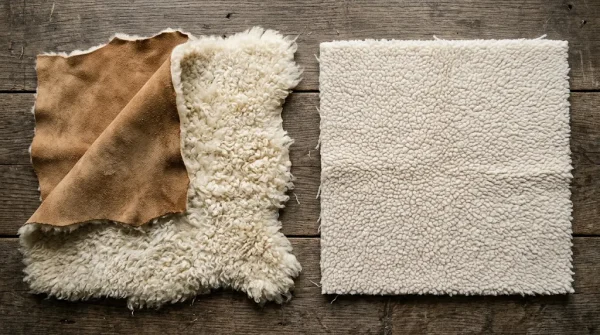
Shearling is a sheep or lamb skin that has been tanned with the wool left on. Sherpa is a synthetic fleece fabric made to copy the look of shearling. The surface can look alike, but the material underneath is completely different.
What shearling is
Shearling comes from a recently shorn sheep or lamb. The skin is tanned and dressed with the wool still attached, so you get two sides in one piece. One side is suede, usually worn on the outside. The other side is clipped wool, which sits against your body. You can read the basic definition on the Wikipedia page for shearling.
Because it is a natural skin with real wool, shearling is heavy for its size, flexible, and it breathes. If the terms around it confuse you, our guide to shearling, sheepskin and lambskin sorts them out, and the sheepskin page on Wikipedia gives the wider background.
What sherpa is
Sherpa is a fabric, not a skin. It is a synthetic fleece with a textured pile that looks like shearling wool. You will mostly find it as a lining or a collar, and on hoodies, blankets and budget coats. Synthetic shearling fur is commonly called sherpa, so when a seller says faux shearling, they usually mean sherpa.
It is lighter than real shearling and usually costs much less, which is why it shows up everywhere. For a casual layer on a mild day, that is a fair trade.
How they compare
| Shearling | Sherpa | |
|---|---|---|
| Made from | Real sheep or lamb skin with the wool attached | Synthetic fleece fabric |
| Outer surface | Suede or smooth hide with a dull finish | Fabric, often with a slight sheen |
| Weight | Heavier | Lighter |
| Breathing | Breathes | Usually breathes less |
| Warmth | A dense wool pile is the better insulator in real cold | Fine for light layering and mild weather |
| Care | Needs proper care, no machine washing | Follow the label, many can be washed |
| Price | Higher | Lower |
These are general differences. Always read the label on the exact piece you are buying.
How to tell them apart
Start with the label. A real shearling jacket should say shearling or sheepskin, and a sherpa piece will list polyester or another synthetic. If a listing only says faux or leaves the material out, ask before you buy.
Then use your hands and eyes. The outer side of fake shearling tends to have a sheen, while real shearling looks duller and feels smooth. Part the wool on the inside and look at the base. On real shearling you will see the skin and the wool fibers growing from it. On sherpa you will see a woven or knitted fabric backing. We have a longer checklist in our guide on how to tell real shearling.
Which one to buy
If you want one coat for many cold winters and you are happy to look after it, real shearling is the better choice. Our guides on how to care for a shearling jacket and whether shearling jackets are waterproof will help you keep it in good shape.
If you want something cheap and washable for casual days, sherpa does the job. Just do not pay shearling prices for it.
Every jacket in our shearling jacket collection is real sheepskin shearling. Standard sizes run from XS to 3XL, shipping is free worldwide, and custom measurements are available. Not sure about your size? Use the shearling jacket size guide, or start with our B3 bomber and aviator shearling jackets.

Pingback: Is Shearling Wool? What Shearling Actually Is
Pingback: How to Tell if Shearling Is Real: 6 Quick Checks