No products in the cart.
Uncategorized
Is Shearling Wool? What Shearling Actually Is
20
Nov
Nov
It is one of the most common questions people ask before buying a shearling jacket: is shearling wool? The honest short answer is that it is a bit of everything. Shearling is a sheep or lamb skin with the wool still attached, so the warm part is wool and the outside is a tanned skin. This guide explains what that means, how it is made, and how it compares with the other words you will see on a label.
Table of Contents
The Short Answer
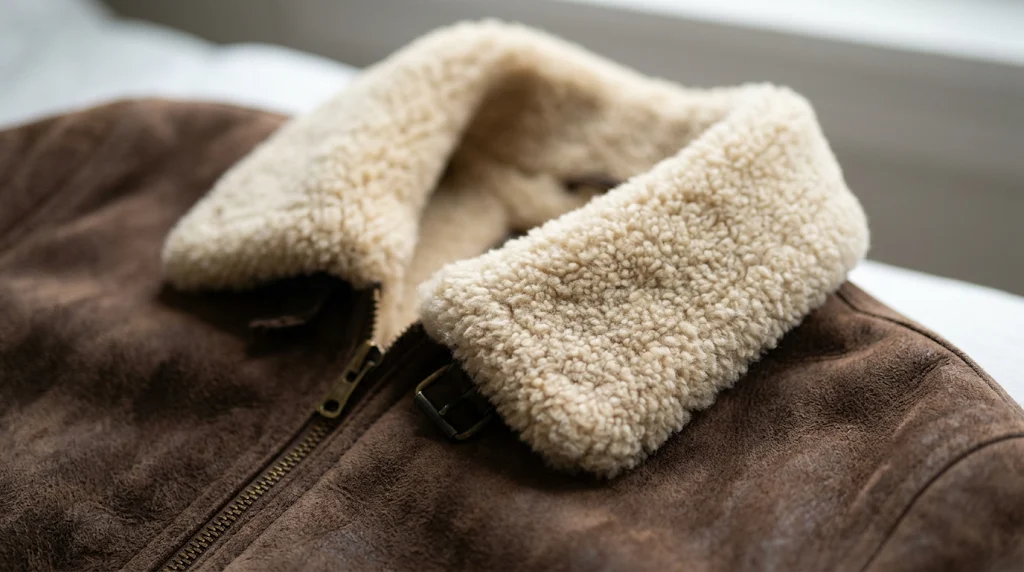
Shearling is not just wool, and it is not just leather. It is the tanned skin of a sheep or lamb with the wool left on it. The wool side faces in, next to your body, and the skin side, usually finished as suede, faces out. So when someone asks whether shearling is wool, the answer is that the inside is real sheep wool, attached to a skin that has been tanned so it stays soft and lasts.
How Shearling Is Made
Most shearling starts as the skin of a recently shorn sheep or lamb, so the wool is short and even. The skin is then tanned with the wool still in place, which is the step that makes it different from a wool fabric or an ordinary leather. The wool is trimmed to an even depth, and the outer side is finished, often as suede, so the jacket has a soft face outside and a dense fleece inside.
Because the wool is grown on the animal and not spun into yarn, there is no weaving or knitting involved in the warm layer. It is the natural fleece, in its natural arrangement, which is a big part of why it feels the way it does.
Wool, Fur or Leather
People sometimes call shearling fur because the inside looks and feels plush. The fibers, though, are sheep wool, and the skin they sit on is tanned in a way similar to leather. The easiest way to think about it is as a two part material: a leather like skin on one side and a wool fleece on the other. If a label says shearling, that is the combination it is describing.
Shearling vs Sheepskin vs Sherpa
The words overlap, which causes plenty of confusion. In everyday shopping, sheepskin and shearling are often used for the same kind of product, a tanned sheep skin with the wool on. Sherpa is different. It is the name used for a fabric made to imitate shearling, so a sherpa lined jacket has a synthetic fleece and not real wool. We compare the terms in more detail in our guides to shearling vs sherpa and shearling vs sheepskin vs lambskin.
Why Shearling Feels So Warm
Wool fibers trap small pockets of air, and air held close to your body is what keeps you warm. The skin on the outside adds a layer that blocks wind. Put the two together in one piece and you have a jacket that insulates and shields at the same time, without needing a separate lining sewn in. It also breathes better than a synthetic fleece, which is why many people find a shearling jacket comfortable for longer than they expect.
How to Spot the Real Thing
Real shearling has a slightly dull, soft outer skin, and the wool grows out of that skin. A fake has a surface that tends to look shiny and a lining that is stitched on to a fabric backing. Our guide on how to tell real shearling walks through the checks you can do at home, including what to look for at the edges and seams.
Looking After the Wool and the Skin
Because shearling has two parts, it needs a little care for both. Brush the wool gently so it stays fluffy, keep the suede face away from heavy rain and direct heat, and let the jacket dry slowly if it gets damp. Our guide to caring for a shearling jacket covers the routine step by step, and if you are looking for your next one, browse the shearling jacket collection.
Quick Questions
Is shearling real wool?
The fleece on the inside is real sheep wool, still attached to the skin it grew on. The skin is tanned, so the finished material is wool and leather in one piece.
Is shearling the same as fur?
No. Fur usually describes the pelt of other animals. Shearling comes from sheep and lambs, and the fiber is wool.
Is shearling warmer than ordinary wool?
It works differently. A wool coat depends on thick fabric, while shearling combines a wool fleece with a wind blocking skin, which is why it often feels warmer for its weight.
Where can I read more about the material?
The Wikipedia article on shearling gives a neutral overview.

Pingback: Shearling vs Sheepskin vs Lambskin: What Is the Difference?