No products in the cart.
Uncategorized
Types of Flight Jackets: A2, G1, B3, B6 and MA1 Explained
21
Nov
There are more types of flight jackets than most people expect, and the names are easy to mix up. The A2, G1, B3, B6, MA1 and the RAF Irvin all began as working gear for pilots and aircrews, yet they look and feel very different. This guide explains each one in plain words, what it was made from, and which one fits the way you want to dress today.
Table of Contents
What Counts as a Flight Jacket
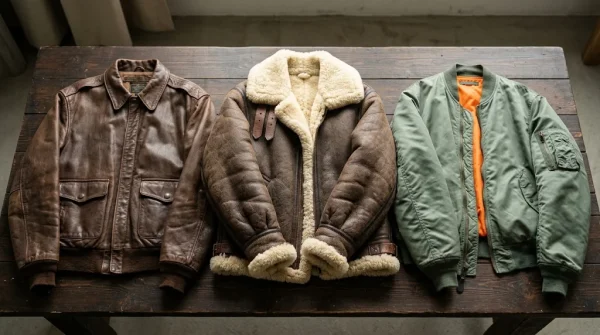
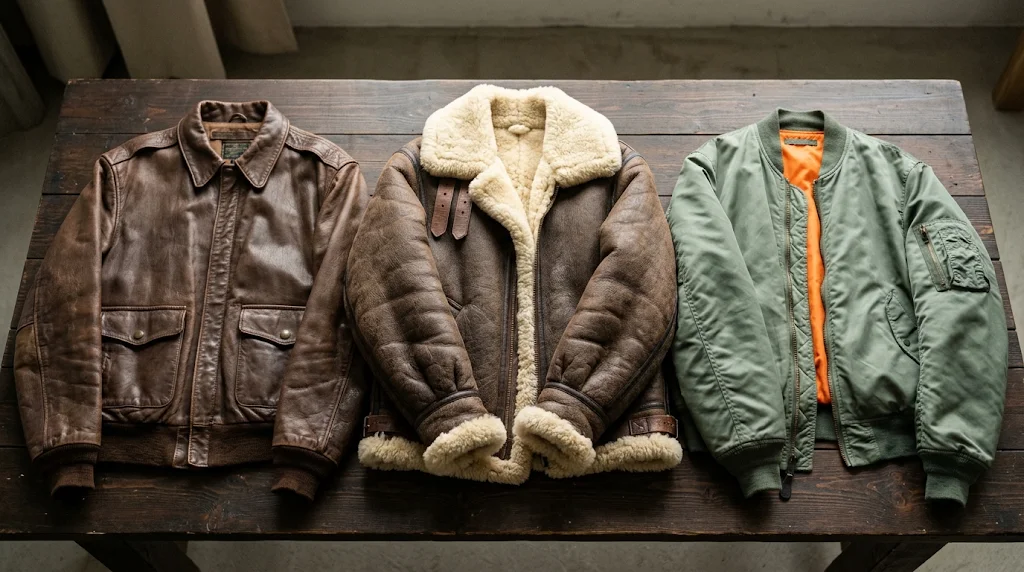
A flight jacket is a jacket that was first designed for pilots and aircrews, and later worn by everyone else because it worked so well. The Wikipedia page on flight jackets gives the wider history. For shopping purposes it helps to sort the types by material: leather jackets such as the A2 and G1, sheepskin jackets such as the B3, B6 and RAF Irvin, and the nylon MA1. The material tells you most of what you need to know about warmth and weight.
The A2: Leather and Lightweight
The A2 was made standard issue for the US Army Air Corps in 1931. It was first made from horsehide, and cowhide and goatskin were approved later. It has a cotton lining, a shirt style collar that snaps flat and a zip front, which makes it a neat, slim jacket rather than a heavy one. It replaced the older A1, a sheepskin jacket with a knitted stand up collar that proved not durable enough. You can read more on the A2 jacket page. Because the A2 is lightly lined, it suits cool days better than freezing ones.
The G1: The Navy Cousin
The G1 followed in 1940 as the US Navy version of the same idea. The original specification called for chocolate brown goatskin, a rayon lining and a fur collar, and the jacket was used by Navy flight crews as well as Marine Corps and Coast Guard crews. It is also the jacket Tom Cruise wore in Top Gun, which helped bring it back into fashion. Our Top Gun G1 jacket guide explains that look in detail, and the G1 jacket page has the full specification history.
The B3: The Heavy Sheepskin
The B3 is the one most people picture when they hear flight jacket. It was developed in the early 1930s as a winter alternative to the goatskin A2, and it was used by US Army Air Forces aircrews in World War II, especially in Europe, where cold air at altitude was brutal in planes that were not pressurized. The classic B3 has a thick sheepskin lining, a broad collar that turns up, knitted cuffs and waistband, two large front pockets and a zip front. Our B3 bomber jacket guide goes deeper, and you can see the range in the B3 bomber and aviator shearling jackets category. You can see the classic shape in our men’s B3 aviator shearling jacket in black.
The B6: The Lighter Sheepskin
The B6 was standardized for the US Army Air Corps in June 1939 as a middle weight choice. It gave crews more warmth than a leather A2, but less bulk than the heavy B3, which mattered in cramped cockpits. A B6 usually has a smaller, neater collar and a trimmer cut, and some versions add side zips at the hips. If you cannot decide between the two sheepskin styles, our B3 vs B6 bomber jacket comparison sets them side by side, and the B6 bomber jacket guide explains the five main differences.
The RAF Irvin: The British Take
Across the Atlantic, Leslie Irvin designed and made the classic sheepskin flying jacket. He set up a manufacturing company in the United Kingdom in 1926 and became the main supplier of flying jackets to the Royal Air Force for most of World War II. That is why many sheepskin aviator jackets today are sold as Irvin or RAF style. The look is similar to the B3, so the names are often mixed, and it is worth checking the collar and lining details on the product page. Our aviator jacket guide compares all three.
The MA1: The Nylon Jacket
The MA1 came from the US Air Force in the 1950s and was a different answer to a new problem. Jet aircraft flew higher and colder, and heavy leather jackets could get wet and freeze, so the Air Force wanted a lighter, all year jacket made from very high quality nylon with a polyester interlining. The classic MA1 is sage green, and many versions have a bright orange lining. It is the lightest of these types, and it suits fall better than deep winter. See the MA1 bomber jacket page for more. We focus on sheepskin, so the MA1 is here for context rather than as part of our range.
How to Choose Between the Types
Start with your weather. For hard winters and long days outside, a B3 is the warmest choice. For cold city days and commuting, a B6 is lighter and easier to wear all day. For mild weather a leather A2 or G1 style makes sense, and for early fall the nylon MA1 is enough. Then think about fit, because sheepskin is thick and does not stretch much at first. Our sizes run from XS to 3XL, and the shearling jacket size guide shows how to measure at home. If you are not sure whether you are looking at a bomber or an aviator, read our flying jacket vs bomber jacket guide as well.
Quick Questions
Is a flight jacket the same as a bomber jacket?
Not exactly. Bomber jacket is the everyday name for many flight jackets, but the term flight jacket also covers pilots’ jackets from other services and eras. Our guide on flying jacket vs bomber jacket explains how the names overlap.
Which type of flight jacket is the warmest?
The B3 is the warmest, because its sheepskin lining is deeper than the one in a B6 or the leather jackets. It was designed for crews flying high in unpressurized planes.
What is the difference between an A2 and a G1?
Both are leather flight jackets. The A2 was made for the US Army Air Corps and has a shirt style collar, while the G1 was made for the US Navy and has a fur collar.
Do you ship sheepskin flight jackets worldwide?
Yes, shipping is free worldwide, and our sheepskin jackets come in sizes XS to 3XL. Import duties or local taxes charged by your country are not included.
